


Leather Care: The Ultimate Guide to Shoes, Bags, and Furniture
Leather Care: The Ultimate Guide to Shoes, Bags, and Furniture
A high-quality pair of leather shoes or a timeless handbag represents a true investment in craftsmanship and style. But the fast pace of everyday life takes its toll: moisture leaves unsightly marks, dust leaves a visible layer, the fine sheen gives way to a dull film, and stubborn dirt collects in the creases. The once-flawless leather material suddenly looks tired and brittle, with visible stains and signs of wear. This not only diminishes the beauty but also drastically reduces the lifespan of the products, including leather boots, handbags, and furniture such as sofas and chairs.
However, the solution does not lie, as is often assumed, in harsh chemicals or expensive miracle cures with a high price. The true, often completely underestimated secret to lasting suppleness in care of leather lies in a simple yet masterful tool: the right leather brush or cleaning brush equipped with durable bristles.
As experts in the manufacture of high-quality premium brushes, we at Frank Brushes know: leather is a living, natural product. Without the right treatment and consistent cleaning, the material loses its elasticity, becomes brittle, and fades. The correct use of a brush with natural bristles, especially horse hair, is essential for maintaining quality.
In this guide, discover the importance of high-quality tools such as leather cleaning brushes and learn a care routine that will make leather goods last for generations—and for which your customers will thank you.
Why the Brush Is the Most Important Tool for Leather
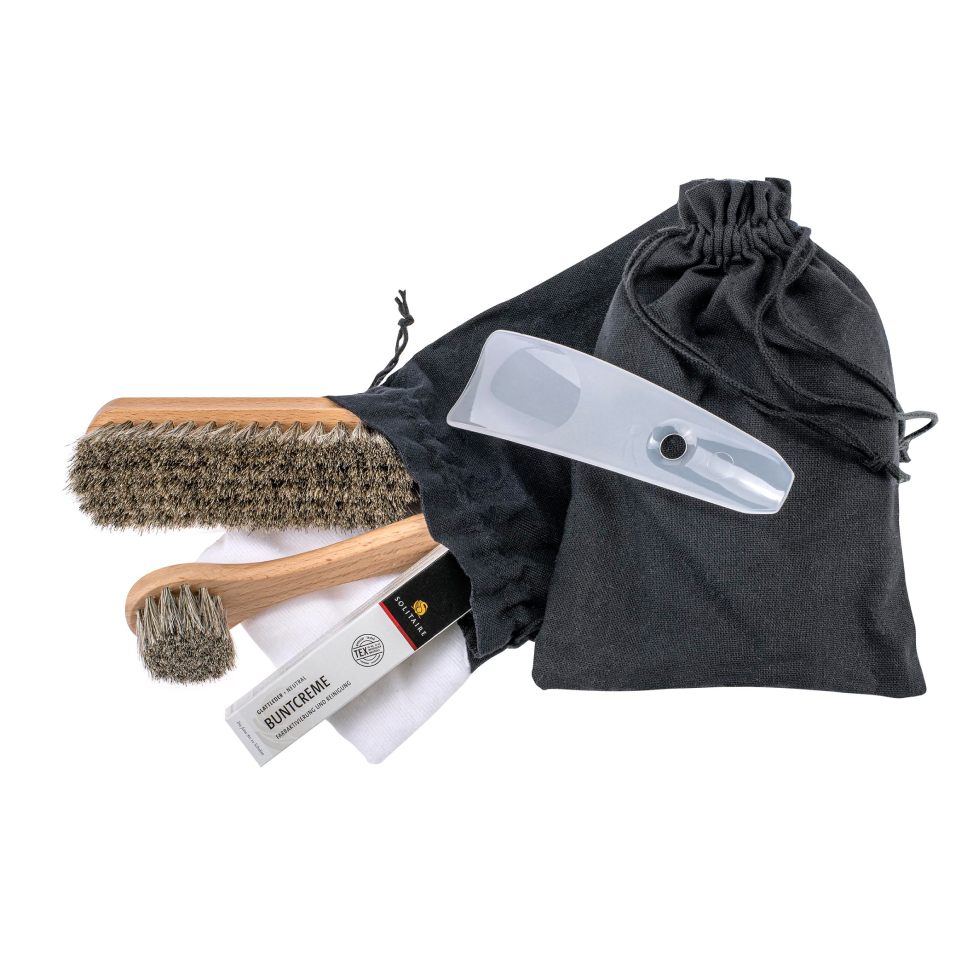
When professionals talk about leather care, many immediately think of shoe polish, leather balm, or waterproofing spray. But before any care product can be applied, the brush -especially a leather brush or leather cleaning brush – is absolutely essential. The mechanical cleaning and preparation of the material is the very first, crucial step in leather care, helping to remove ingrained dirt, surface dust, and stains effectively.
High-quality leather shoes, leather boots or handbags have tiny pores. If these pores are clogged with dirt, dust, or residues from old care products, the material cannot breathe and cannot absorb new active ingredients. A good leather cleaning brush should have durable bristles and a high-quality handle to effectively remove dirt and stains from leather surfaces.
The Functions of a Premium Brush in Detail
Leather is a porous natural material that is highly sensitive to environmental factors like sunlight, heat, and moisture. The right leather brush performs several functions that often go unnoticed in everyday use:
- Preparation: Sturdy yet soft and durable bristles of a cleaning brush gently remove ingrained dirt deep from the pores and the grain side without scratching the valuable material. This mechanical action is essential for loosening dirt.
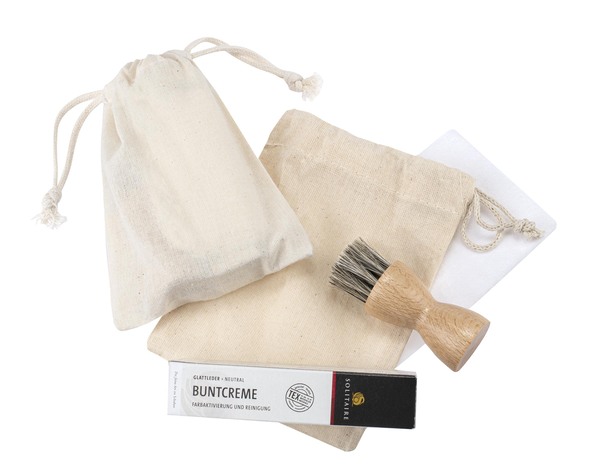
- Application: Special pot brush designs allow precise product pickup and controlled application to even the most hard-to-reach spots, including the intricate seams of shoes and boots.
- Finishing and working in: The targeted friction of large-surface polishing brush tools, often made from horse hair, generates gentle heat. This heat melts the waxes, allowing them to penetrate deep into the structure and create the ideal shine, especially for suede polishing shoes and smooth leather shoes.
Expert tip from Frank Brushes: “The quality of the bristles makes all the difference. A pure natural product like horse hair or boar bristles has completely different properties than synthetic fibers. It absorbs the product better and releases it evenly in the optimal amount.”
Identifying Leather Types: The Key to Proper Care
Before cleaning leather, you must first identify the exact type of material. Not every cleaning brush or product is suitable for all types of leather.
Smooth Leather: The Versatile Classic
Smooth leather is the most commonly used type for leather shoes, handbags, and luxury furniture. It is often made from cowhide. In technical terms, a distinction is made between pigmented smooth leather and aniline leather.
Fine calfskin, with its delicate grain, is especially elegant. For all these smooth surfaces, horse hair brush tools form the foundation of leather care and cleaning.
Suede: Safely Treating Nubuck and Genuine Suede
In stark contrast to this is suede. This includes nubuck (finely sanded on the grain side) and genuine suede or velour leather. These materials are much more susceptible to moisture and stains, as they do not have a closed, smooth, sealed surface.
Warning: With these types of leather, the use of classic shoe polish or leather grease is absolutely forbidden. Instead, a special suede cleaning brush or leather cleaning brushes (often with brass bristles or rubber lamellae) is required, which restores the original velvety texture after cleaning and supports proper suede polishing shoes techniques.
The Ideal Routine: Properly Caring for Smooth-Leather Shoes
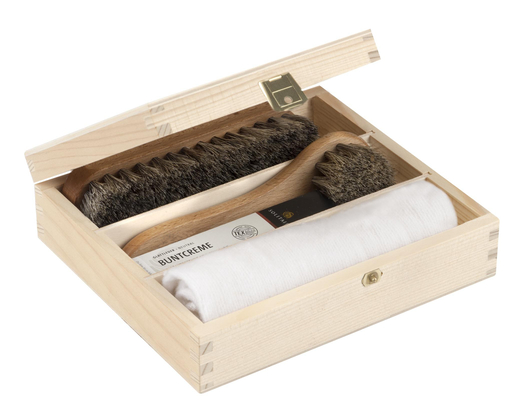
Caring for smooth-leather shoes is a true craft. With professional tools such as a leather brush, a cleaning brush, and the right set, you can significantly extend their lifespan.
The golden rule is: Always remove the laces first. This is the only way to optimally reach the tongue and every hidden area. Next, it is advisable to insert a suitable shoe strechter made of untreated wood. It smooths out creases, allowing the care products to penetrate evenly later on. Now grab a stiff brush. Thoroughly brush the smooth leather to remove dry dust, sand, and coarse dirt. Pay special attention to the area between the upper and the sole.
For stubborn or ingrained dirt, simply brushing is often not enough. When cleaning leather, it is advisable to use a pH-balanced leather cleaner or a light, soapy mixture. Using harsh chemicals like household detergents can strip leather of its natural oils. Apply the cleaner with a soft cloth using circular motions. It is important not to soak leather in water, as this would wash the natural, nourishing fats and tannins out of the leather. The undesirable result: the material would become brittle and fragile. Air drying leather at room temperature and away from direct sunlight or heat sources is crucial to prevent damage. Cleaning leather before conditioning is essential to prevent long-term damage.
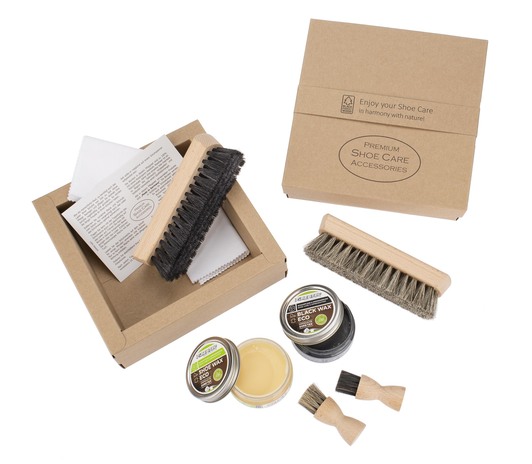
Once the smooth leather is completely dry, it needs conditioning. Conditioning restores the natural oils that keep leather supple and prevent cracking. Use an application brush (pot brush) to pick up a high-quality leather cream and apply it evenly. Choose a matching color for faded areas, and a colorless version for general maintenance. Unlike a flat cloth, the bristles reach even the finest pores. The cream should be applied in only a very small amount. Over-conditioning leather can clog pores and make it greasy or saggy. The active ingredients must then be allowed to soak in for about 15 to 20 minutes.
Now comes the most important step for the appearance. A high-quality dauber brush, ideally made of dense horsehair, is essential for this. Quick, light strokes across the material generate fine frictional heat. This melts the wax contained in the leather cream or in the wax applied separately. The result is an incomparable, deep shine and a flawless polish.
Expert tip from Frank Brushes: “Horsehair brushes are recommended for applying conditioning cream and maintaining leather, as their fine and soft bristles do not scratch the leather surface.”
Your path to the perfect Leather Care
Are you searching for high-quality shoe brushes, coordinated shoe polish systems, or customized shoe care solutions?
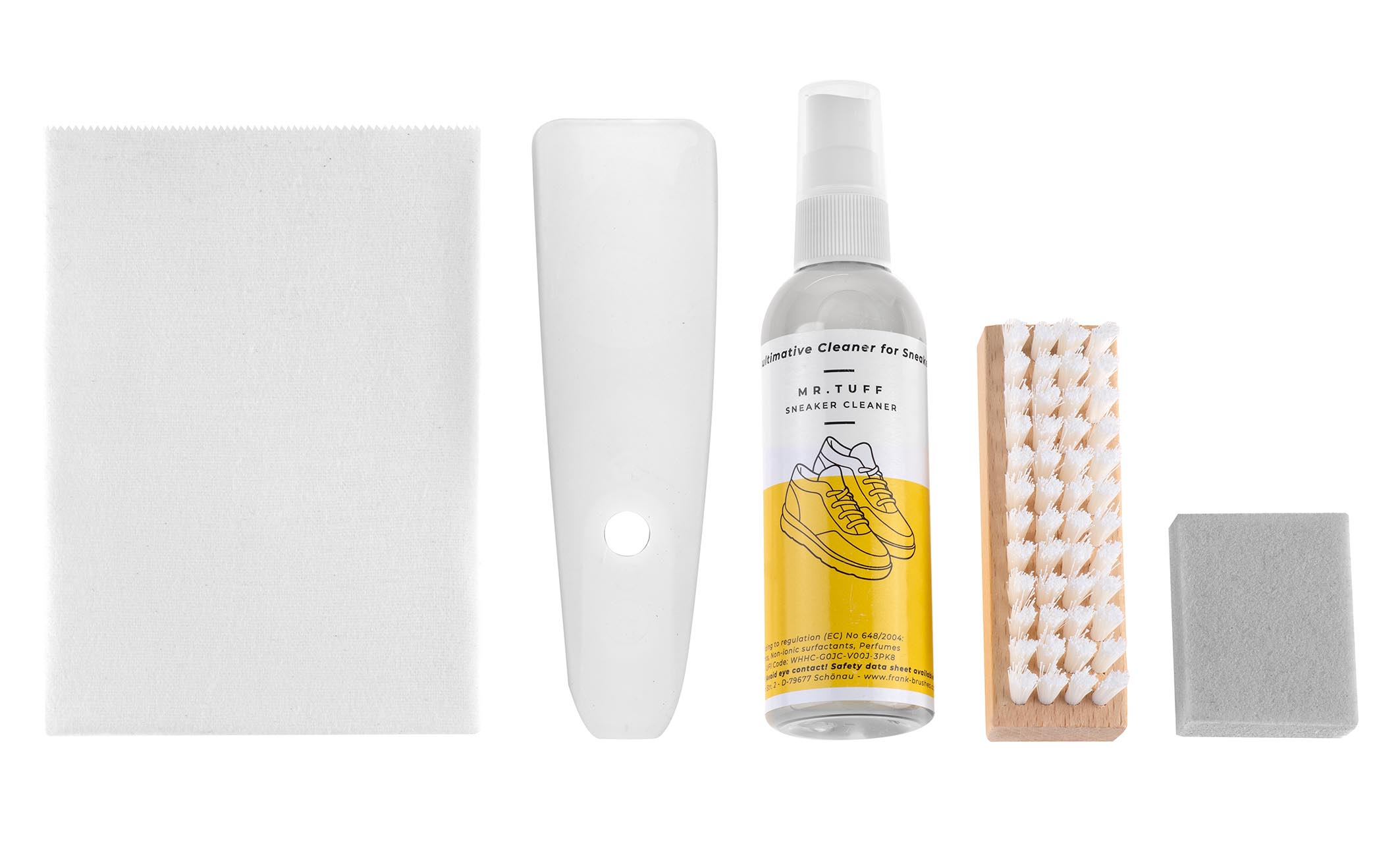
We recommend a structured selection of brush types tailored to your assortment of shoes, from classic leather shoes to modern sneakers.
Contact us for expert advice on professional shoe care and long-term leather care concepts.
UV Protection, Waterproofing, and Water Repellency
One aspect of leather care that is often underestimated is UV protection. Over time, harsh sunlight strips the material of its pigments. High-quality care products therefore often contain built-in filters that act like an invisible shield.
In addition, protection against environmental factors is crucial: To effectively waterproof leather, apply a good spray from a distance of about 30 cm. This ensures that rain and liquid-based dirt simply roll off. During the fall and winter months, this process must be repeated regularly to prevent moisture from penetrating deeply into the shoes.
Everyday Leather Care: Handbags, Sofas, and Jackets
The principles of professional shoe care can also be applied to other leather goods, though they require slight adjustments in the choice of products.
For example, a fine leather handbag should be dusted regularly with a soft brush, and then a fine leather cream should be applied with a cloth. To maintain shape, leather bags should be filled with acid-free tissue paper or stuffed with newspaper like leather shoes with a shoe strechter.
With a leather sofa or jacket, the surface area is significantly larger. Here, after thoroughly vacuuming, we recommend using a gentle cleaning foam.
Important: After cleaning, the leather should be re-conditioned, but never with leather grease! Leather grease is too heavy, does not absorb completely, and would rub off onto clothing. Instead, use a light leather milk or a special care lotion for furniture and jackets to ensure the material retains its shape and remains smooth.

Why Professionals Rely on Genuine Natural Products
Countless tips and home remedies for leather care circulate online—from banana peels for shine to questionable concoctions. A simple oil from the kitchen may seem like a good idea at first glance, but as experts, we strongly advise against it. Cooking oils can go rancid in leather, emit an unpleasant odor, disrupt the pH balance, and permanently ruin the product.
For manufacturers, shoemakers, and retailers of premium leather goods, there are no compromises. Investing in proven care products and, above all, in professional brushes is the best guarantee of maximum customer satisfaction. A superbly crafted wooden brush with dense natural bristles not only enhances the care process but is also an essential accessory for the discerning specialty retailer.
Curious about more tips on caring for leather products? Learn here how to properly care for footwear with boot brushes from Frank Brushes.
(Note for retailers: Discover our range of custom-made care brushes and expand your portfolio with accessories that meet the demands of your products.)
Your path to the perfect Leather Care
Are you searching for high-quality shoe brushes, coordinated shoe polish systems, or customized shoe care solutions?
We recommend a structured selection of brush types tailored to your assortment of shoes, from classic leather shoes to modern sneakers.
Contact us for expert advice on professional shoe care and long-term leather care concepts.
FAQ – About Leather Care
This depends on daily use. Coarse dust and dirt should be brushed off briefly with a dirt brush after each wear. Removing dirt after use prevents the leather from getting dry and cracked. It is recommended to deep clean and condition leather, leather boots or other leather goods like bags or jackets every 6 to 12 months.
A good brush also needs to be cared for. Excess cream should be wiped off on a cloth after use. Polishing brushes can occasionally be washed with a mild shampoo, rinsed thoroughly with water, and air-dried with the bristles facing down.
No, this is not recommended for fine shoes. Leather grease penetrates extremely deeply, closes the pores, and softens the leather, but it prevents any shine. It is excellent for rugged hiking boots or heavily used outdoor leather, but not for elegant leather. In this case, shoe polish and shoe wax are the right choice.
Light stains can be brushed off dry using a special brass brush or a leather eraser. For extreme, deep-seated stains, suede can actually be wet-cleaned (using a special suede shampoo). Important: Always wash the entire shoe, never just specific spots, as this can cause unsightly water marks.
A shoe strechter made of untreated wood (such as cedar) absorbs the moisture that builds up inside the shoe while wearing it. It also smooths out creases from walking. When the leather is brushed afterward, the care products can reach even the deepest creases and prevent cracks.
Nubuck leather is a type of smooth leather in which the grain side has been very finely sanded. This gives it a velvety, peach-like surface. Regular smooth leather retains its closed surface. Nubuck must be cared for without using greasy creams to avoid clumping the rough texture.
Yes. A good hard wax (shoe wax) not only produces a beautiful shine when polished, but also creates a fine, water-repellent protective layer over the leather. It is an excellent complement to waterproofing.
This should definitely be avoided. When black shoe polish is applied or buffed with a brush, color residue remains in the bristles. If you use this brush on brown smooth leather, dark streaks will be transferred to the lighter leather. A separate application and buffing brush is required for each base color.