


The Boot Brush: Gamechanger for your Leather Boots Care
Boots are made to handle tough conditions and ensure a confident appearance. They’re designed to protect our feet from the elements: they withstand rain, dirt, and snow, and keep every step comfortable through long days outdoor. Whether they’re heavy-duty work boots, elegant Chelsea boots, or classic riding boots—proper care is of the utmost importance to ensure that such premium footwear retains its distinctive style and its protective qualities over time. Without the right treatment, the material quickly becomes brittle, cracked, prone to discoloration, and loses its characteristic luster—and thus its value.
But especially in the premium segment, there’s a trap that even experienced shoe enthusiasts fall into: They invest a fortune in handmade shoes and expensive leather oils—only to then scratch the leather with a low-quality, shedding brush. Just as damaging is the habit of running a single brush across several shades of polish: the residue inevitably causes color transfer and visible staining on the next pair to be treated. In the search for a solution, the term “boot brushes” quickly comes to mind. However, “the” one boot brush does not actually exist in the strictest sense. Rather, in the professional shoemaking world, this term refers to a precisely tailored arsenal of stiff dirt brushes and gentle polishing brushes designed to meet the demanding requirements of a boot.
Why the Brush Is the Key to Proper Care
The undisputed—and often overlooked—star of any shoe-cleaning routine isn’t the polish, but the mechanical tool. As a renowned manufacturer, we at Frank Bürsten know this: even the most expensive care product in the world cannot do its job if the tool in your hand fails.
But why is a standard brush often simply not enough for fine boots? The answer lies in the design. A high shaft and heavily profiled soles require tools whose bristles can penetrate deep into every texture without damaging the delicate surface. Choosing the right brush therefore determines whether leather care is a source of frustration or joy.
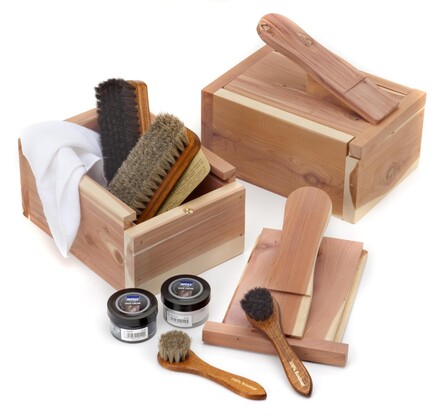
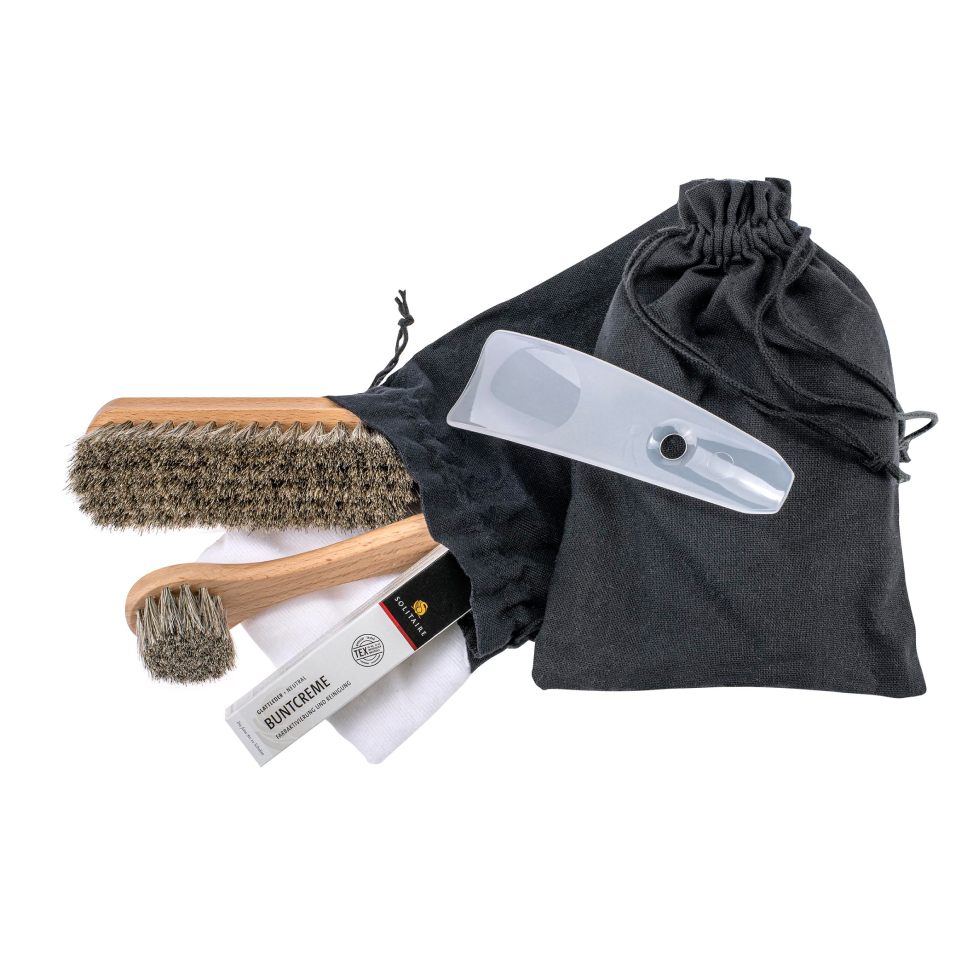
A high-quality brush from our company is characterized by first-class material quality, a precisely calibrated bristle density, and a solidly crafted wooden handle. For polishing, we strongly advise keeping a separate brush for each polish color in your collection—using one brush across multiple shades inevitably leads to color transfer and stains the next pair you treat. This handle offers optimal resistance and fits ergonomically in the hand. Through our precise manufacturing techniques, we ensure that the brushes do not shed bristles but remain dimensionally stable and perform reliably over a long period of time. Only when the leather has been perfectly prepared and freed of dust through this gentle yet highly effective mechanical step can it breathe again and absorb new nutrients.
How to Clean Leather Boots and Shoes Properly: The Professional Three-Step Process
It’s no surprise: After a long day of wear, shoes show clear signs of use. Dirt, sand, road salt, and moisture take a toll on the material. For daily wearers, we recommend a thorough leather cleaning at least once a month to extend the life of every pair, while a quick brush-down after each use should become a normal part of the evening routine. Cleaning should ideally be done in precise steps and—this is the most important professional tip—using separate tools!
The biggest mistake in shoe care is using the same brush for the sole and the upper. Sand left in the tread acts like sandpaper on the delicate leather during the subsequent polishing. It is also wise to remove the laces beforehand, so that excess dirt cannot hide in the eyelets and the tongue is fully exposed for treatment.
-
For the sole: Use a stiff dirt brush (for example, one with sturdy plant fibers) to remove dried mud from the deep grooves.
-
For the upper: While the leather is dry, use a much softer brush to gently wipe away the dust from the surface.
If stubborn residue remains after pre-brushing, use a little water. Use a soft sponge or a clean cloth made of fine fabric to gently wash away the dirt. A mild professional leather cleaner also works well here. Important when using liquids: Never use too much water, so as not to completely soak the leather. If the boots have been exposed to road salt, wipe the affected areas with a barely damp cloth right away, since salt left untreated will eventually crystallize and cause permanent damage to the fibers.
One of the most important rules of all: Never place your leather boots near a running heater or in direct sunlight! The heat will immediately make the leather hard and cracked, destroying its natural structure.
nstead, let the boots dry in a well-ventilated area. Be sure to use high-quality cedar shoe trees. The wood gently draws out any remaining moisture from the interior and helps maintain the exact fit. (Newspaper should only be used as a last resort here, as the ink can rub off and cause discoloration on light leather.) For longer storing periods, leave the shoe trees in place and keep the pair in a breathable cotton bag rather than a plastic box, so that no moisture can grab hold of the lining. To protect this shape even when putting them on daily, it is also always advisable to use a long shoehorn.
The Perfect Waterproofing for Invisible Protection
In the professional world, there is a strict order of steps for smooth leather:
- Clean
- Waterproof
- Condition
Protection against new environmental factors is essential. Apply the spray to the cleaned leather, which should still be free of any care products. Spray the waterproofing evenly over all external surfaces of the boot. This barrier ensures that rainwater simply rolls off in everyday use. It is sound advice to repeat this step on new boots before they are worn outside for the first time, since fresh leather is particularly vulnerable to staining. If you were to apply wax first and then spray, the solvents in the spray could immediately dissolve the painstakingly polished layer and ruin the shine.
Intensive Care: Apply Nourishing Ingredients and Maximize Longevity
After cleaning and waterproofing, it is essential to replenish the material with moisture and care. A good leather conditioner restores the flexibility and suppleness of the fibers and prevents the boots from drying out and becoming stiff or brittle. The ability of leather to age beautifully depends almost entirely on this single step. This step varies greatly depending on the type of leather:
Smooth leather and oiled leather
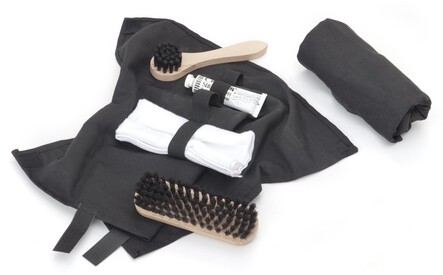
For classic smooth leather and fine full grain leather, use a high-quality shoe polish or a matching leather conditioner. When applying conditioner, work it into the surface in a very thin layer, as less is often more in this case. For particularly rugged oiled leather or heavily used hiking boots, it’s best to use an intensive leather grease. Special leather oils (or a very rich oil) can also work wonders here. Use a small pot brush for precise application on hard-to-reach seams or the frame. For large areas, the grease is often massaged deep into the pores with a cloth. After a short processing time, polish with a shine brush to restore the original color and rich luster. Do not worry if the leather looks slightly darker right after application—this is perfectly normal, and the appearance evens out as the conditioner is fully absorbed into the fibers.
Special considerations for suede
When it comes to boots made of suede or nubuck, one rule is paramount: Never use creams containing oil or leather grease! After gentle cleaning, the suede brush (with brass or crepe bristles) is the most important tool.
It roughens the material and reliably restores its matte, velvety character. Special liquid suede care products also refresh the color and even out any discoloration caused by water spots.
Choose quality when it comes to brushes
See for yourself the high-quality craftsmanship trusted by professionals, shoemakers, and premium brands. Discover our selection of exceptional brushes for everyone who appreciates the true value of leather and wants to preserve and extend the life of every pair they own.
FAQ – The Most Important Questions About Proper Boot Care
This depends largely on daily use and weather conditions. After wearing them outdoors, wipe off any heavy dirt and excess dirt immediately while the boots are still dry. As a normal rule of thumb, daily wearers should plan on a complete leather cleaning at least once a month to safeguard the lifespan of the pair. For regular use, we recommend deep conditioning with grease or shoe polish and re-waterproofing approximately every three to four weeks.
Stay calm and never dry the boots on a radiator or with a hair dryer. Use cedarwood shoe trees and let the boots dry in a well-ventilated area. Since the water has stripped the material of important oils, the boots will need extra care afterward**—a generous round of leather conditioner restores the lost moisture and prevents the dreaded stiffening of the fibers**.
Leather is a versatile natural product. A sturdy work boot made of oiled leather requires a much richer treatment (such as leather grease) than an elegant Chelsea boot made of fine full grain leather (which is better cared for with shoe polish or a mild leather conditioner). The right products preserve the specific properties of each material, and any honest care guide must acknowledge that no single recipe fits every leather type.
With suede, restraint is key. Avoid water as much as possible. Brush off dust while dry, and use special erasers for suede to remove stains. Waterproofing is particularly important here, as the open structure is more susceptible to moisture and can quickly take on stains from any soft fabric or surface it brushes against.
As a premium manufacturer, we guarantee: Yes, top-quality professional tools make all the difference. An inferior brush sheds bristles, fails to clean deep into the pores, or—in the worst case—scratches the surface of your expensive leather shoes. Our tools are precisely designed to meet the demanding requirements of professional care. Please note that we always recommend keeping a dedicated brush for each polish color you use—this small detail prevents color transfer and protects the appearance of every pair in your collection.
The shaft of a boot is often stiff. If you force your foot into the boot without a shoehorn, you’ll eventually bend the heel counter. This ruins the shape and the secure fit on your foot. A long shoehorn significantly protects the material when putting on the boot and is a must-have for every boot lover. Following these simple instructions consistently will eventually become second nature and reward you with footwear that maintains its character and lifespan for many years to come.
The bristle material itself is just as decisive as the construction. Soft natural hair brushes made from horsehair or goat hair are the gentlest choice for smooth or delicate leathers, including fine full grain leather and elegant Chelsea boots. Their soft bristles clean dirt and dust without scratching the surface. For sturdy oiled leather on work or hiking boots, boar or pig bristle brushes are ideal, as they reach deep into the pores and remove ground in grime that softer hair simply cannot grab. To bring out a true high shine on full grain leather or rare exotic finishes, brushes made from goat or yak hair are preferred: their ultra-soft bristles polish the wax layer without disturbing it. For pre-cleaning outdoors, even heavy-duty cast iron scrapers have their place at the front door, as they reliably remove caked mud, snow, and sand before any indoor routine begins. Suede or nubuck, finally, demands a dedicated suede brush with brass or crepe bristles, designed to lift the nap and properly restore the velvety appearance without damaging the delicate fibers.